Project description
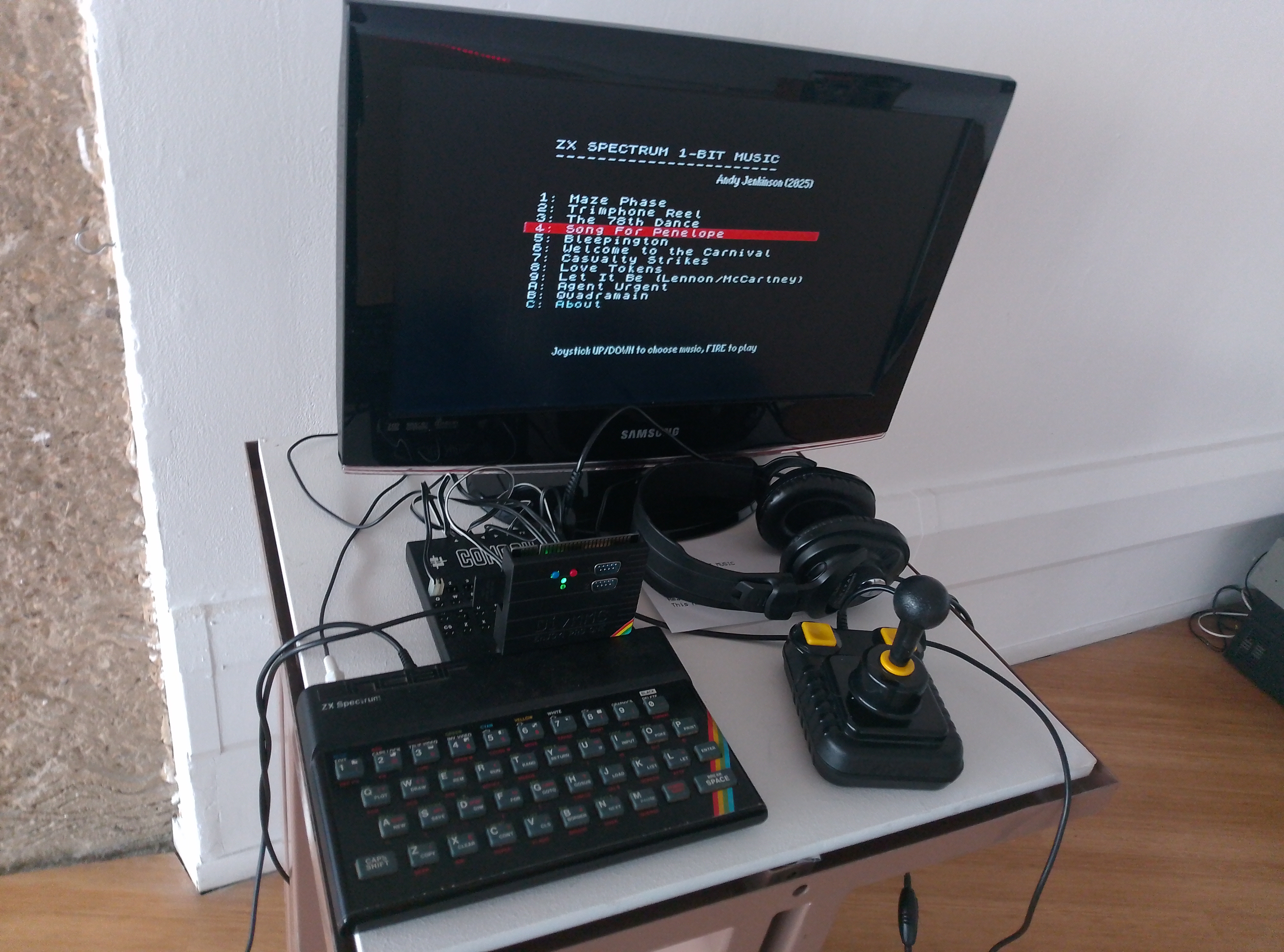
Executable Structures presents the Sinclair ZX Spectrum as a live computational sound instrument. All audio is generated in real time through custom Z80 assembly code running on original hardware. There are no samples, no playback files and no emulation. Sound emerges directly from processor timing loops that toggle a single 1-bit voltage state, producing rhythm and pitch through binary switching alone.
Visitors interact with the system using a joystick interface and listen through headphones. The installation offers a series of executable compositions: navigable structures that exist only while the machine is running. Each action alters timing relationships and structural behaviour, allowing audiences to hear computation unfolding as rhythm, texture and form.
By making processor timing perceptible as sound, the work reframes a domestic microcomputer as a contemporary sound engine and foregrounds constraint as compositional method. The ZX Spectrum’s extreme technical limits — 1-bit audio, minimal memory and strict processor timing — become the defining aesthetic language.
How it works
- Sound source: 1-bit beeper output created by toggling a single state at audio rates.
- Composition method: timing-loop engines where musical structure is the consequence of CPU time allocation.
- Interactivity: joystick inputs select and navigate executable structures.
- Listening mode: headphones only (no amplified sound), suitable for shared exhibition environments.
Different beeper 'engines' have different audio character; all from a single beeper and the careful construction of timing loops within the code itself.
Installation requirements
- Footprint: 1 table (approx. 120 × 60 cm) + 1 chair or stool (optional).
- Power: 1 mains outlet.
- Audio: headphones only (supplied with the work).
- Lighting: standard gallery lighting (low ambient light preferred but not required).
- Access: clear signage encouraging one visitor at a time (or specify multiple stations if provided).
Safety & robustness: all equipment is table-mounted; no ceiling rigging, drilling, or permanent venue modifications required.
Credits
Concept, software and installation: Andy Jenkinson.
Hardware: Sinclair ZX Spectrum (1982) and supporting interface components (as required).